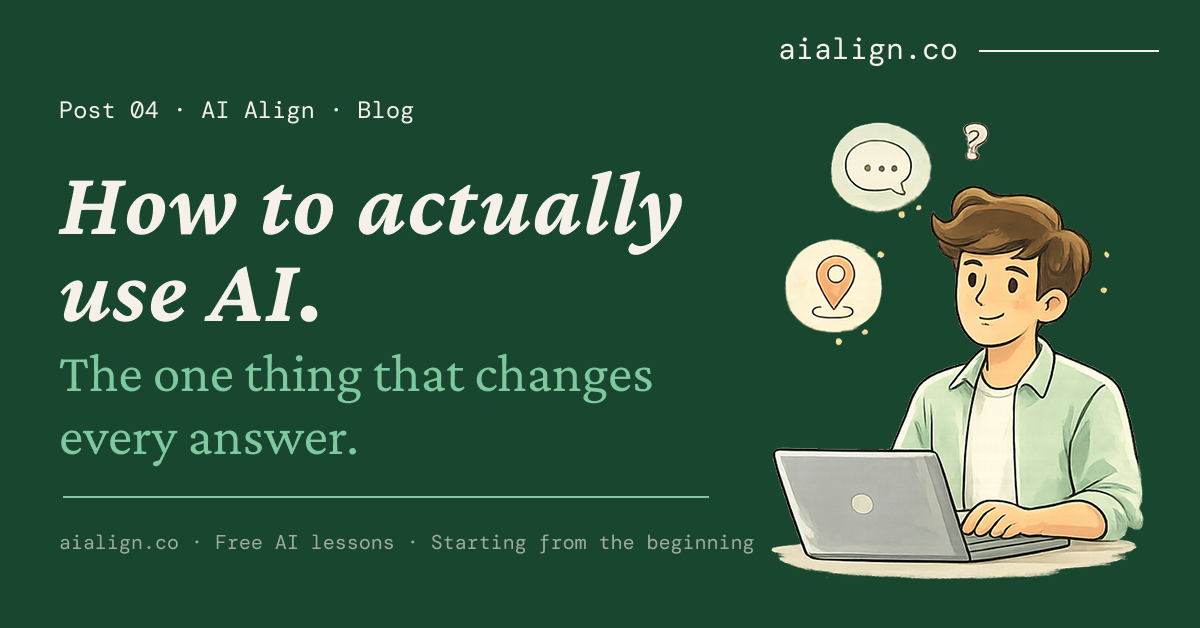
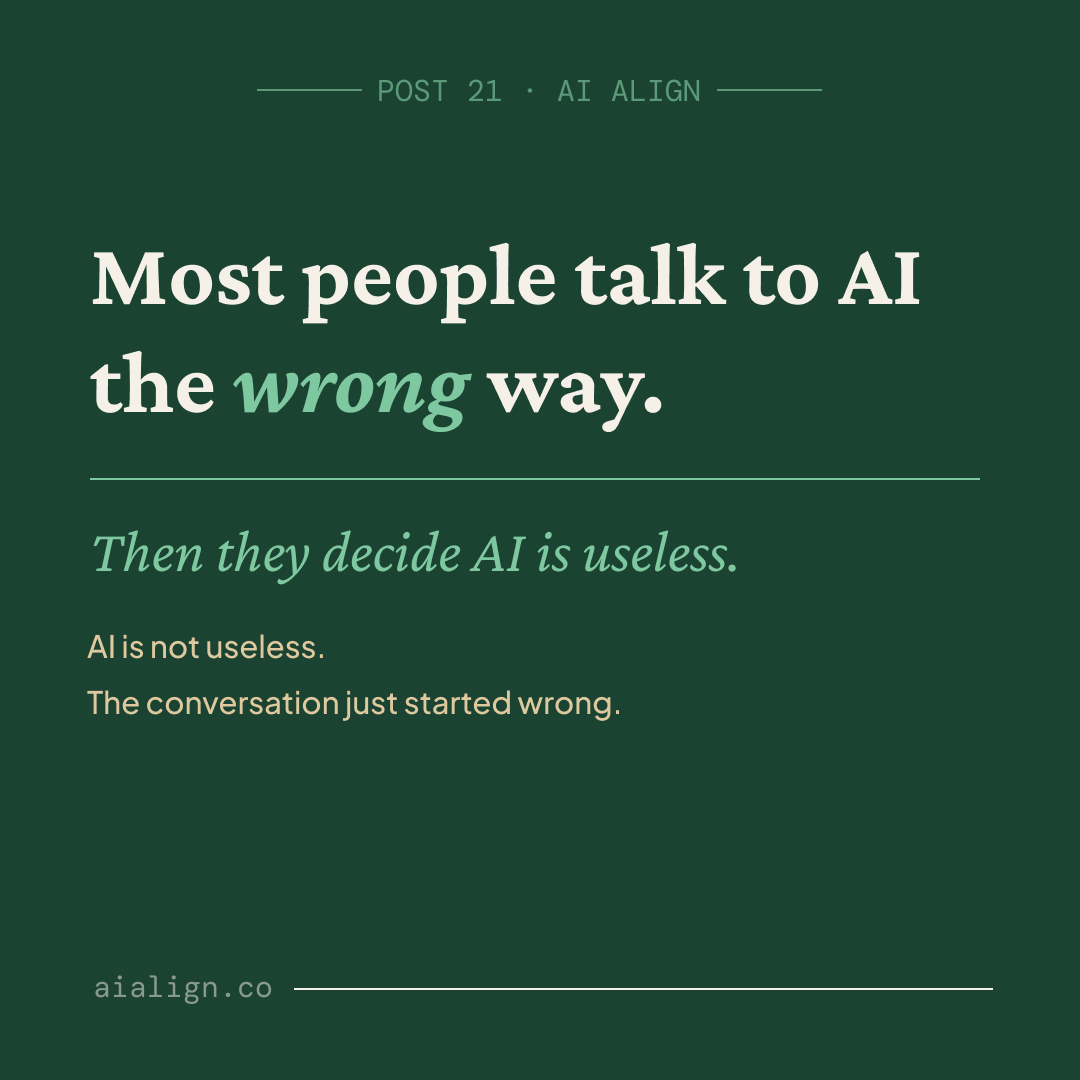
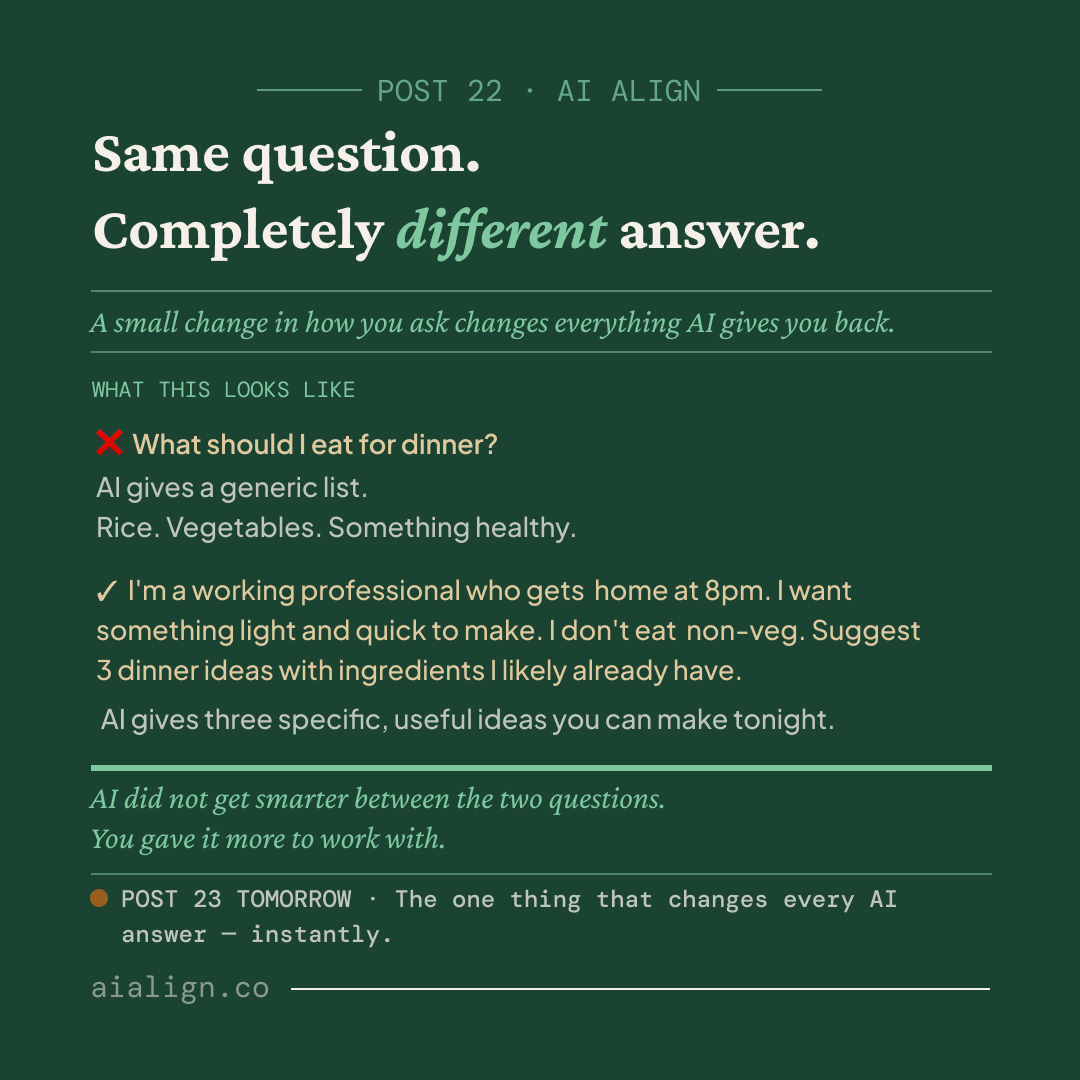
Most people who tell me AI is useless have one thing in common. They tried it once, asked it something vague, got a generic answer, and moved on. The AI was not broken. The conversation just started wrong.
The pattern I kept seeing
When someone asks me which AI tool they should use, my first question back is always the same — what are you trying to do, and how are you asking it to do it?
Because almost every complaint I hear about AI — it gave me a useless answer, it did not understand my situation, it made something up — comes from the same place. Not the tool. The question.
I see this regularly. A student gets a generic essay introduction and decides AI cannot write. A business owner asks for a social media post and gets something that sounds nothing like their brand. A professional asks for help with an email and gets something too formal, too long, and not quite right.
None of them tried a different approach. They just concluded that AI does not work for them.
Walk into any shop and ask for "something"
Think about what happens when you walk into a clothing shop and say “give me something.” The shop assistant guesses. Maybe they bring out something in your size, maybe something near the front — whatever they think you might want.
Now walk into the same shop and say: “I need a dark blue kurta, medium size, for a wedding next week, under ₹800.” You walk out with exactly what you came for.
AI works identically. The difference between a useless answer and a genuinely useful one is almost always how specific the question was. Not how powerful the tool is.
The one thing that changes every answer
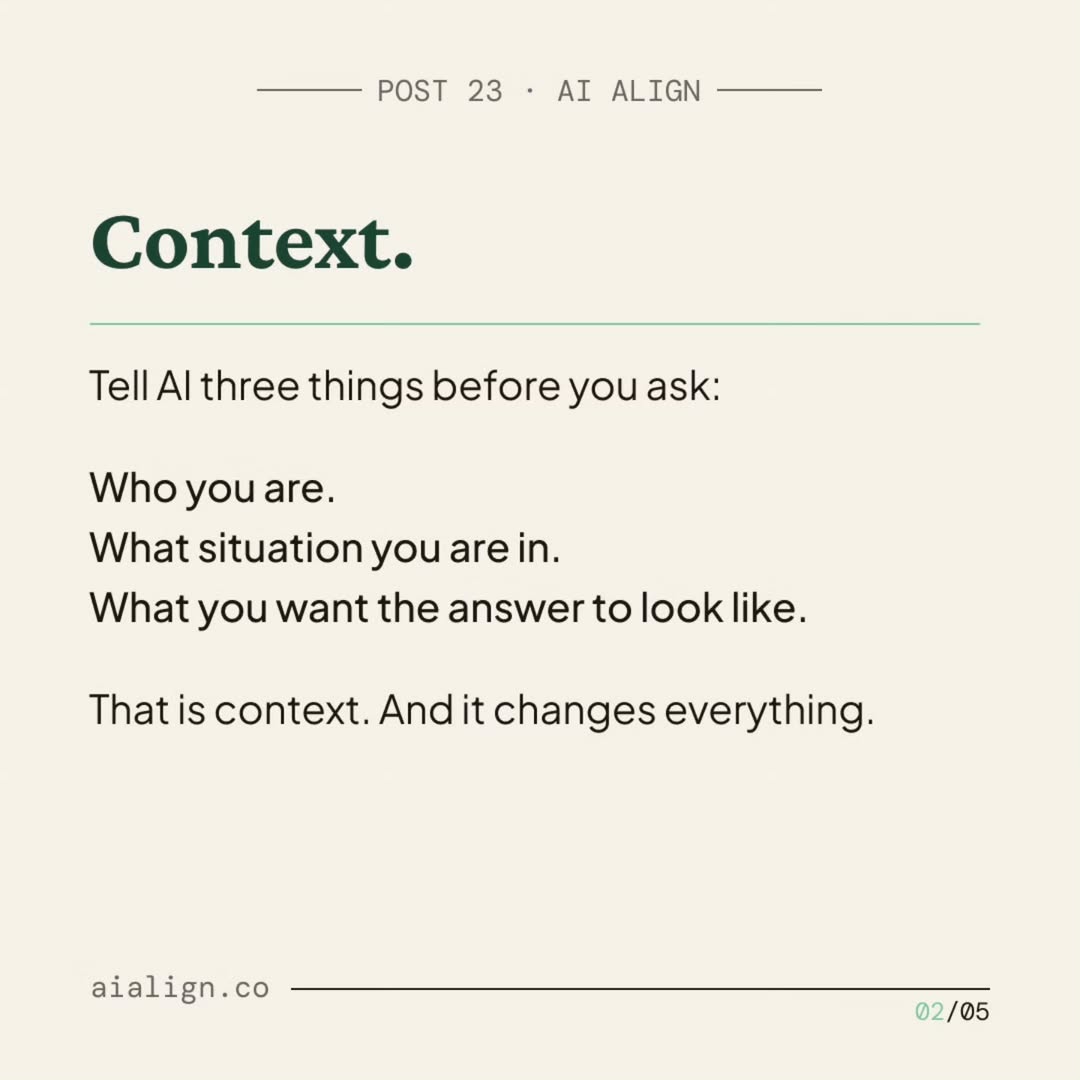
Context.
Not a longer question. Not a smarter tool. Not a premium subscription. Just context — telling AI who you are, what situation you are in, and what you want the output to look like.
This is not a small tweak. It is the difference between getting a generic list and getting something you can actually use today.
What this looks like in practice
Here is the same request, two different ways.
Without context: “Help me write an email to my client.”
With context: “I am a project manager at a software company. My client asked for a status update on a delayed project. The delay is our fault. I want to apologise without being too formal, give a new realistic timeline, and reassure them that we are on top of it. Keep it under 150 words.”
Same AI tool. Same request. Completely different result. The second version gives AI everything it needs to actually help. Who you are. What the situation is. What the output should look like.
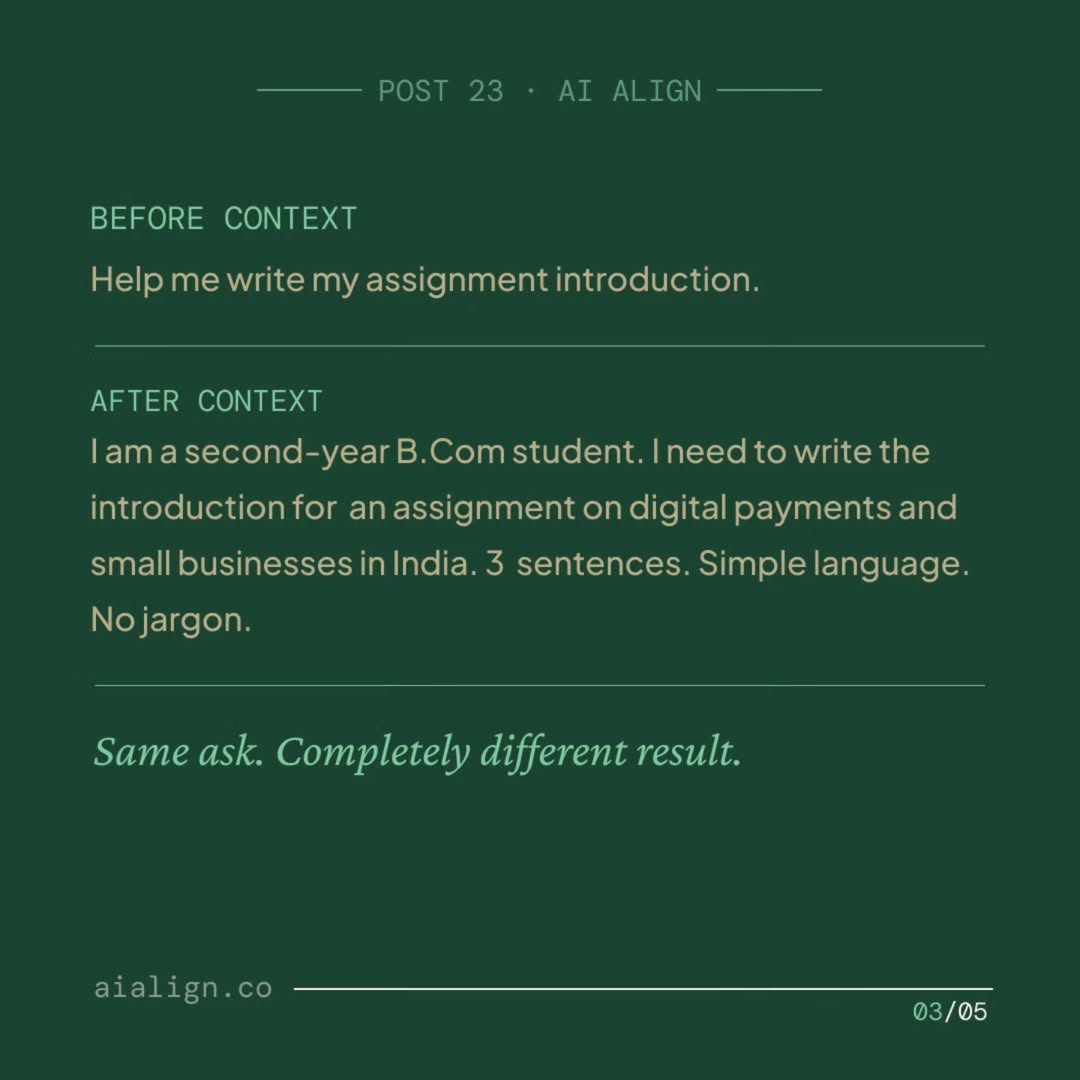
The same logic applies to a student writing an assignment introduction, a business owner writing a product description, or anyone summarising a long document. The request is not the problem. The missing context is.
Three things every good AI question has
After testing and evaluating AI tools every day for client work — I have found that every question that produces a genuinely useful answer has three things in it.
Who you are. “I am a first-year engineering student.” “I run a tutoring centre in Coimbatore.” “I am a CA preparing a client report.” AI has no way of knowing your context unless you tell it. The more specific, the better.
What you specifically need. Not “help me” — what, exactly. “Write the introduction for my assignment on digital payments in small businesses.” “Summarise this 20-page report into five key points with action items.” “Generate three product name ideas that would appeal to working professionals in their 30s.”
What the answer should look like. “Simple language, under 100 words, no jargon.” “Formal tone, suitable for a client email.” “Give me a numbered list I can compare easily.” This third part is the one most people leave out — and it is often the one that matters most.
Join AiAlign WhatsApp Channel
Why this matters more than which tool you use
People spend a lot of time debating which AI tool to use. We will get to that — Post 31 introduces the first specific tool. But the tool is not the variable that changes your results the most. How you start the conversation is.
The same vague question that produces a useless answer from one tool will produce a useless answer from every tool. And a well-structured, contextual question will produce something useful from almost any of them.
Before you switch tools — try changing how you ask.
Your next step
Posts 21, 22, and 23 on AI Align go through this in detail — with real before-and-after examples for students, professionals, and business owners. The same question, two different ways. The difference is immediate.
If you have not downloaded the free guide yet — it is the clearest starting point I know how to give you. Twelve pages. No jargon. It tells you exactly which posts to read first, based on whether you are a student, a professional, or a business owner.
Follow @aialignco on Instagram, Facebook, or X for one free lesson every morning.